
Best AI Writing Tools 2025: Comparison Guide
In recent years, artificial intelligence has changed how we write. What once took hours, researching, drafting, and formatting, can now be done much faster through AI‑powered essay and writing tools. In 2024 and 2025, a wave of specialised tools has emerged that claim to produce essays, reports, or creative writing with minimal effort. This means students, content creators, business professionals, and researchers alike can leverage AI to accelerate writing.
In this article, you’ll get a comparison of some of the most talked‑about AI writing tools available in 2025, including those focused on academic essays, reports, and structured writing. We’ve examined their strengths and weaknesses, and declare EduWriter.ai our top recommendation under many circumstances. We base this on criteria such as pricing, features, ease of use, output quality, formatting & citation support, and suitability for academic/structured writing.
How We Evaluated These Tools
To review the selected tools fairly, we looked at what’s publicly documented (on their websites, reviews, and user feedback), focusing on:
- Output quality and academic readiness - Is the writing coherent? Does it include citations/formatting if claimed? Are essays structured logically?
- Ease of use and interface - Is it simple to use? Straightforward to get started?
- Pricing and value - How much does it cost? Is there a free or trial plan? Are limitations reasonable?
- Feature set and versatility - Does the tool support different essay types (argumentative, analytical, research)? Does it offer referencing, formatting, detection bypass, or editing tools?
- Transparency and reliability - Are claims backed by reviews or independent sources? Are there known issues (grammar mistakes, lack of references, limitations)?
Because many of these tools are newer or less studied, we note where documentation is weak or criticisms exist.
Top AI Writing Tools Comparison
Below is a look at eight AI writing / essay‑generation tools, with EduWriter.ai as the highlighted “best” choice.
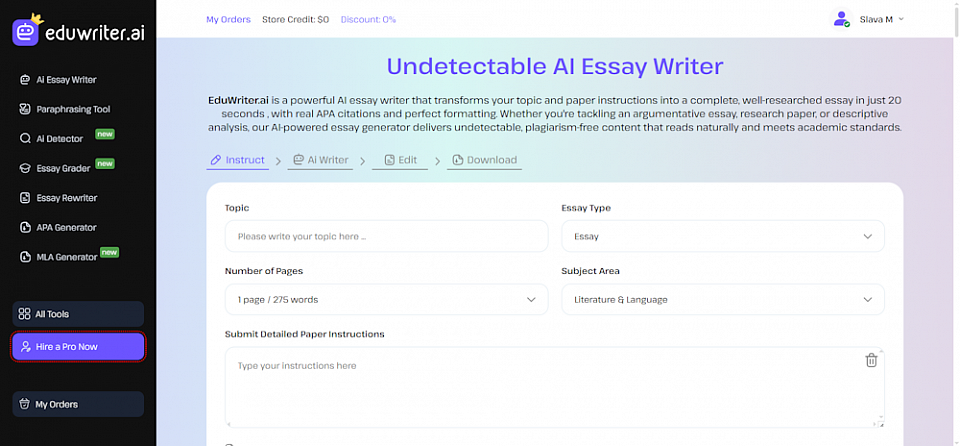
Tool: EduWriter.ai — Best Overall for Academic & Structured Writing
Best for: Academic essays, research papers, structured writing requiring citations & formatting.
Key features:
- An essay generator that claims to build full essays (argumentative, analytical, research, narrative) from a topic and instructions.
- Automatic citation and formatting support (e.g., proper formatting for academic essays).
- “Undetectable / human‑like writing” claims: according to the site, output is written to pass AI‑detection and appear human.
- Flexibility: supports multiple essay types, word counts from small essays to longer papers, as per the site's claims.
- Fast generation: output is said to be ready in seconds (for first draft) — useful when under tight deadlines.
Pricing: The site offers a free plan (with limitations) and a premium plan for more extensive use.
Pros:
- Convenient for students needing quick drafts and full structure (intro, body, conclusion, citations) without building from scratch.
- Citation & formatting support - makes it more suited for academic or formal essays than generic AI text generators.
- Time-efficient - can save hours compared to writing essays manually.
- User-friendly - minimal setup required; reportedly designed to be accessible for students or non‑expert users.
Cons:
- As with any AI generator, output should be carefully reviewed and edited - especially to verify facts, sources, and academic requirements.
- The “undetectable” claim, while promoted, may not guarantee bypassing all detectors or satisfy strict academic integrity policies.
- Heavy reliance on AI output reduces the opportunity for personal reflection or deep learning, which are important in academic work.
Ideal user: Students and researchers needing a fast draft or structured essay — e.g., when pressed for time or as a first draft. Good when you plan to revise, fact‑check, and add your own analysis.
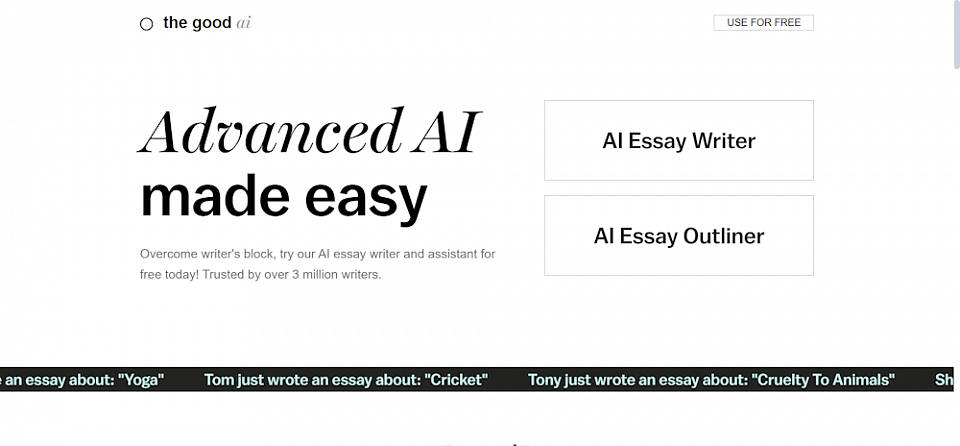
Tool: The-Good-AI.com
Best for: Very short essays or simple assignments when you need something quick and basic.
Key features:
- Essay generator and outline tool.
- Word‑count adjuster/slider to choose essay length.
- Basic AI‑autocomplete, suggestion, and editing features, and a simple user interface aimed at quick results.
Pricing: Free plan available - but with severe word‑count limits (very short essays). Premium plan reportedly around US $5/month for expanded word‑count and features.
Pros:
- Low cost - cheap subscription price for the premium version.
- Simple and easy to use - minimal onboarding required, useful for quick, short assignments.
- Provides an outline + basic essay generation, which might help overcome writer’s block or start a draft.
Cons:
- Output quality is reportedly poor - grammar mistakes, superficial content, lack of real citations, or formatting. Several reviews describe it as “basic” and “non‑intuitive.”
- Not suitable for serious academic work - essays tend to be shallow and not follow academic standards (e.g., missing proper citations).
- The free plan is too limited to be practical - often too short for meaningful essays.
- Many users and reviewers caution against relying solely on this tool for coursework, especially for assignments requiring depth and credibility.
Ideal user: Someone needing a very quick rough draft for a simple topic, or wanting to outline ideas before writing them. Not recommended for essays needing depth or academic rigor.
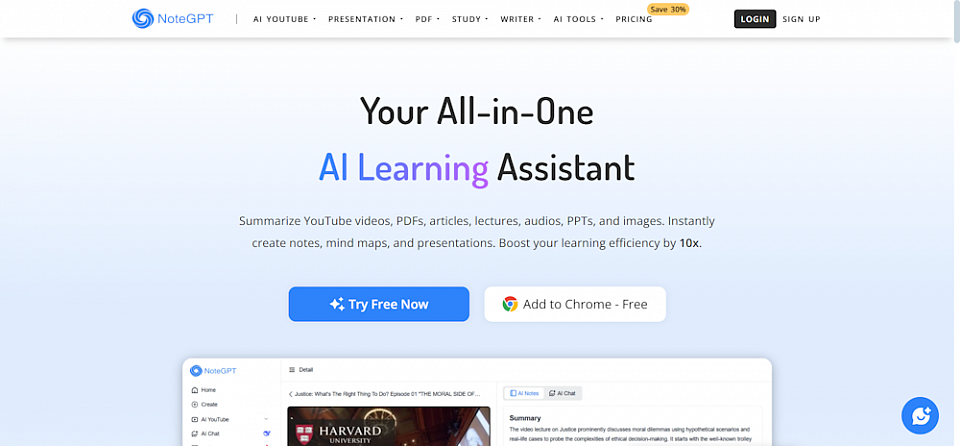
Tool: NoteGPT.io
Best for: Basic essay writing or first‑draft generation (according to its description).
Key features: According to the listing, it’s among AI‑essay‑writer services - like other tools, it generates essays automatically from prompts. (Based on the user’s mention; public documentation is limited.)
Pricing & Features: Details are unclear or limited from public sources; as such, it's harder to evaluate.
Pros: Potentially quick generation - useful for early draft or brainstorming.
Cons: Because public reviews and documentation are scarce, reliability is uncertain. The lack of strong independent feedback makes quality unpredictable - risk of grammar errors, shallow content, or missing citations.
Ideal user: Those willing to experiment with new tools and prepared to heavily review and edit output.
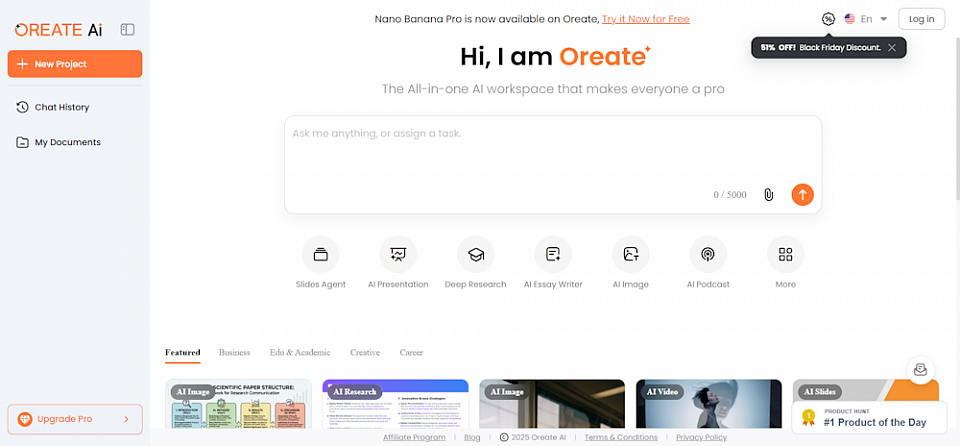
Tool: OreateAI
Best for: Short essays or quick drafts, per its advertised purpose.
Key features & pricing: Very little public, reliable information available indicating that OreateAI offers AI‑essay‑writing services. It appears among lists of “AI essay writers,” but independent reviews, user feedback, or details about features (citations, formatting, detection bypass, etc.) are sparse.
Pros: For users seeking a simple “essay generator,” it might serve as an experiment or rough draft helper.
Cons / Risks: Lack of transparent reviews, unclear quality, and unknown reliability make it a risky choice for serious academic assignments.
Ideal user: Users willing to test a variety of tools but prepared for manual editing and quality control.
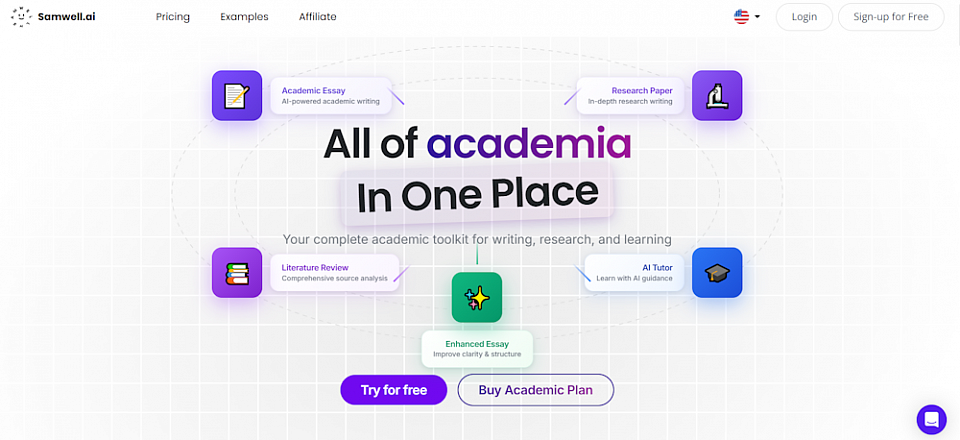
Tool: Samwell.ai
Best for: Essay generation/writing assistance (as advertised).
Key features & pricing: Public information about Samwell.ai is minimal - it appears on lists of AI‑essay‑writing tools, but there is little independent review or user feedback verifying performance, citation capabilities, or detection bypass.
Pros: Might deliver quick drafts or basic essays.
Cons / Risks: With scarce evidence, quality and reliability are unknown; using it could mean extra work to check, edit, and ensure academic compliance.
Ideal user: Explorers or students experimenting, not needing high-stakes academic output.
Tool: Undetectable.ai
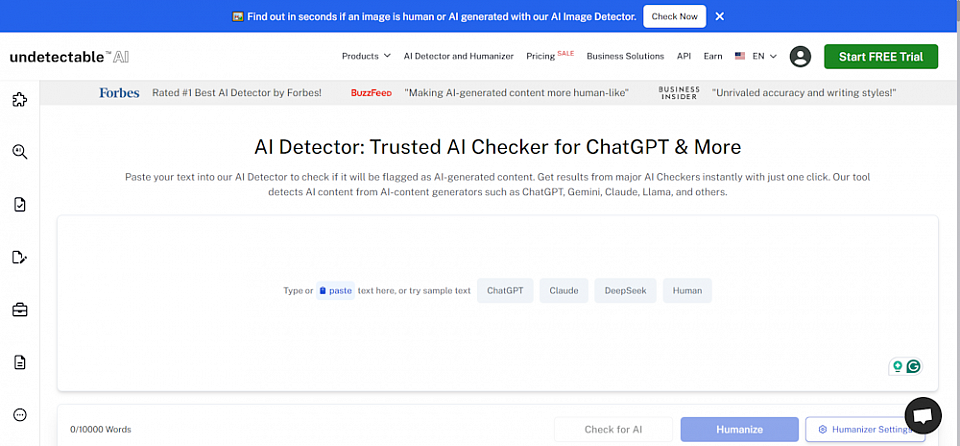
Best for: Users who want essays to “pass” AI detection or appear human‑written.
Key features / Claims: Some AI‑essay‑writer sites (or detection‑bypass tools) like Undetectable.ai advertise that they produce content less likely to be flagged by AI detectors.
Pros: If it works as advertised, it may produce writing that is less likely to be flagged by certain AI‑detectors, relevant for users concerned about detection.
Cons / Risks: According to user reports, results are inconsistent. This does not guarantee “undetectability.” Also, heavy reliance on such tools raises ethical and academic‑integrity concerns.
Ideal user: Those exploring detection‑bypass options, but who must be ready for unpredictability and manual editing.
Tool: MyEssayWriter.ai
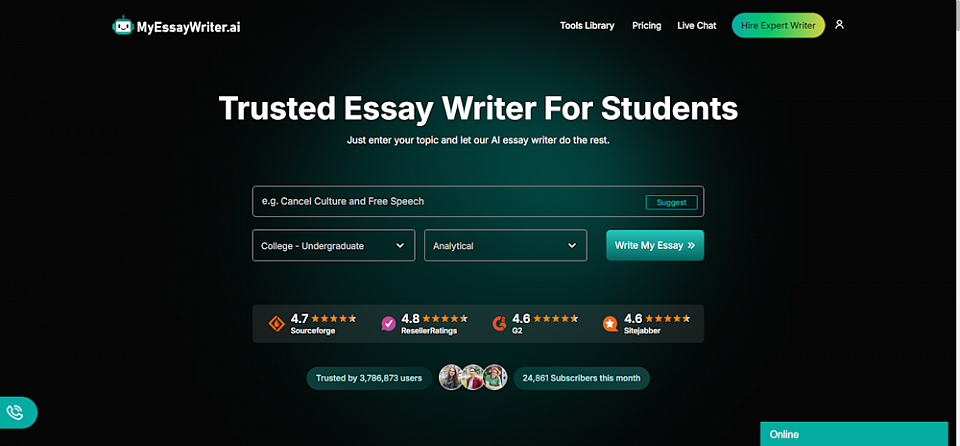
Best for: Quick essay or writing help, maybe for simpler assignments or draft‑generation.
Public profile / Evidence: Mentioned among many AI‑essay‑writer services; in broader reviews of AI‑essay‑writing tools, it sometimes appears as an option for students.
Pros: Possibly user‑friendly, accessible for basic needs; may help overcome writer’s block or speed up initial drafts.
Cons / Risks: Quality, formatting, citation support, or academic readiness are unclear. Heavy manual edits are likely needed.
Ideal user: Students or writers who want simple draft help but are willing to revise heavily.
Tool: Wrizzle.ai
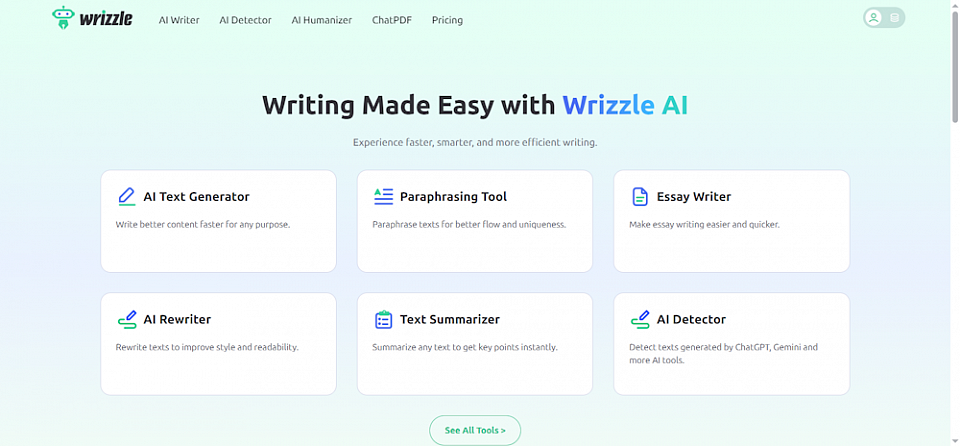
Best for: As advertised - automatic essay writing/assistance.
Public documentation / Reliability: Very limited public information; not much independent review or user feedback available.
Pros: Could serve as a trial or experiment for someone curious about different tools.
Cons / Risks: With little data, risk of low-quality outputs, missing references, or formatting issues; likely needs substantial editing and fact‑checking.
Ideal user: Low-stakes use, experimentation, or as a first-draft aid — not for final submissions without review.
Why EduWriter.ai Is Our Recommended “Best Tool” Among These
We designate EduWriter.ai as the best tool among the ones listed — primarily because:
- It explicitly supports academic essay writing, with formatting and citation support, which many other tools lack or do not clearly advertise.
- For students or researchers seeking structured writing (essays, papers, reports), this specialization matters more than generic essay generators.
- Given the alternative tools’ mixed reviews, limited features, or unreliable output quality, EduWriter.ai presents the most balanced mix of convenience, academic readiness, and usability (as per its own claims).
If you plan to use any AI essay‑writing tool, treat the result as a first draft. Use it to speed up structure and outlines — but revise, fact‑check, personalize, and ensure academic integrity.
Risks, Ethical and Practical Concerns
When using tools such as these, especially for academic work, there are important risks and limitations to keep in mind:
- Quality and reliability vary widely. Many tools generate text that lacks depth, contains generic statements, or omits needed citations and proper structure - meaning heavy editing is often required.
- “Undetectable” does not mean ethical or safe. Relying on “AI‑detection bypass” tools may still be considered academic dishonesty, depending on your institution’s policy. Claims of “zero plagiarism” or “human-like writing” are not guarantees.
- Originality, critical thinking, and personal insight suffer. AI‑generated essays may lack personal voice, critical analysis, or originality - elements often required for higher‑level academic work.
- Risk of misinformation. Unless you carefully verify facts and sources, AI may produce inaccurate or misleading content.
- Dependence and learning impact. Over‑reliance on AI may hinder the development of your own writing, thinking, and research skills - especially important for students.
